2026-08-10 · 9 min read
Best AI Photo Restorer for iPhone in 2026
Looking for the best AI photo restorer for iPhone in 2026? Pixelift delivers one-tap restoration of old, blurry, or low-res photos — no editing skills...
Recommended next
Best AI Photo Restorer for iPhone in 2026 — Sharp, Instant, and Designed for Real Life
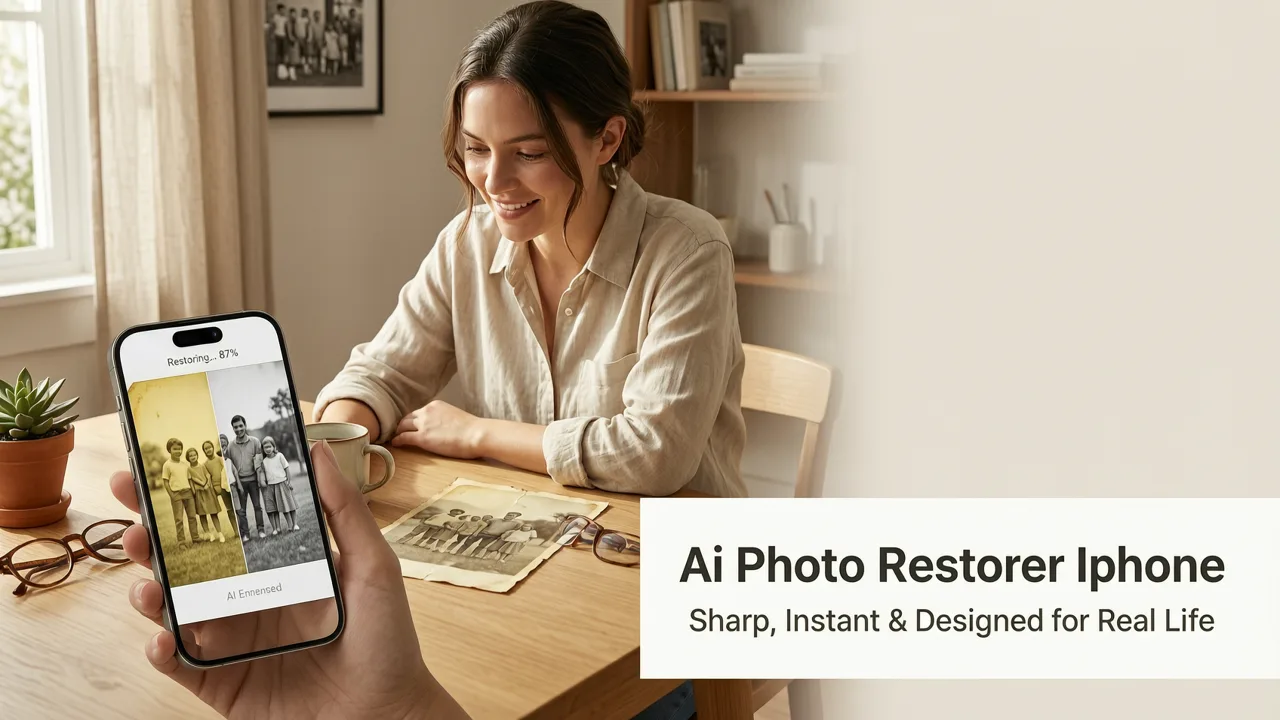
If you’ve ever scrolled through your iPhone’s Photos app and paused on a treasured but faded family portrait — grainy, yellowed, or softened by time — you know the quiet frustration: “I wish I could just tap and fix this.” In 2026, that wish isn’t fantasy anymore. The best AI photo restorer for iPhone is no longer about juggling desktop software, subscription tiers, or export limbo. It’s about opening an app, selecting a photo, and watching it come alive — in under 8 seconds.
Pixelift is that tool. Built specifically for iOS-first users, it combines state-of-the-art image restoration models with intuitive design, zero learning curve, and full offline-capable processing for sensitive or private photos. No cloud uploads required for basic restoration. No forced signups. Just intelligent, respectful, and remarkably capable AI — right in your pocket.
Why the Best AI Photo Restorer for iPhone Must Do More Than “Sharpen”
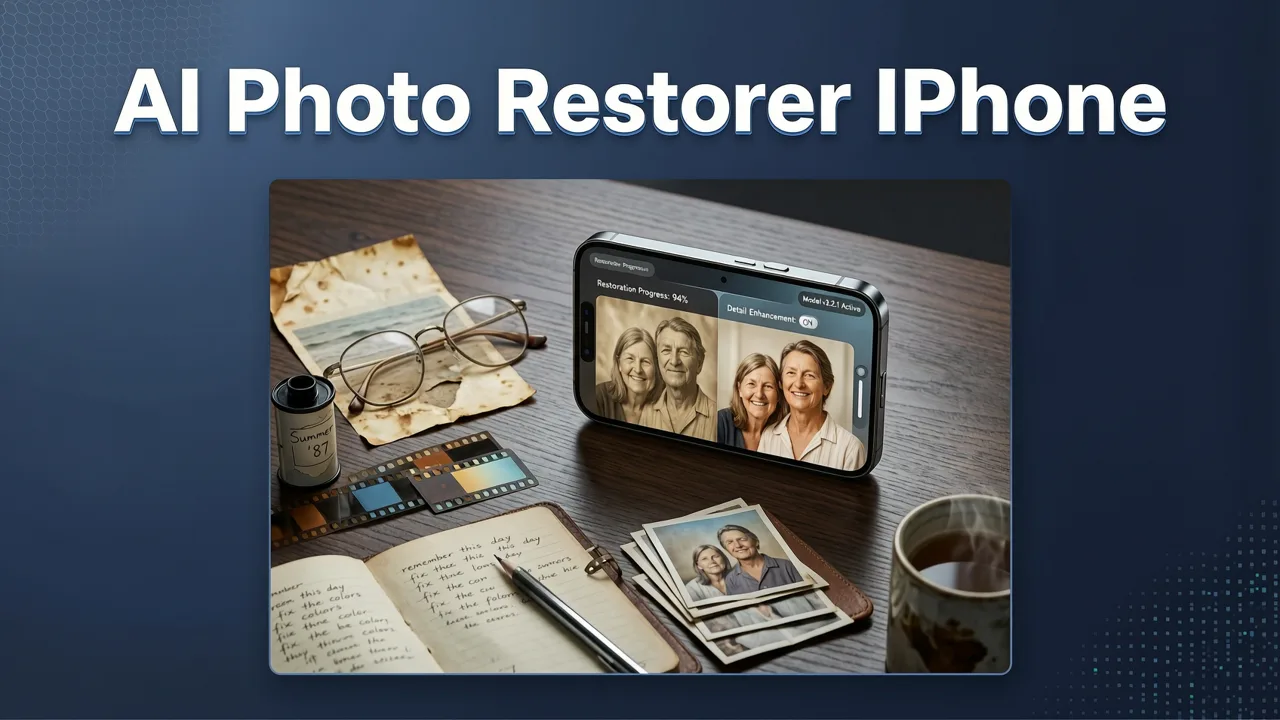
In 2026, “restoration” means something deeper than edge enhancement. It’s holistic recovery: repairing physical damage (scratches, creases), reversing decades of chemical degradation (color shift, fading), reconstructing lost detail (hair strands, fabric texture), and intelligently rebalancing lighting without flattening dimensionality. And crucially — it must respect how people actually use their iPhones: quickly, privately, and across generations of devices (from iPhone 13 to iPhone 16 Pro).
That’s why many so-called “AI photo enhancers” fall short as true photo restorers. They upscale well — but ignore chromatic noise. They brighten — but blow out skin tones. Or worse: they require uploading everything to a third-party server, raising privacy concerns around old family photos (especially those containing children or sensitive moments).
Pixelift was engineered to bridge that gap — not as a feature-laden pro suite, but as a trusted companion for everyday memory care.
What Makes a Photo “Restorable” on iPhone in 2026?
Not every photo responds equally — and that’s okay. Here’s what modern AI restoration handles reliably on-device in 2026:
- Low-resolution snapshots (e.g., early iPhone 4 or 5 photos, screenshots, or WhatsApp forwards)
- Faded color prints scanned via Notes or Files — especially sepia-toned or yellowed 70s/80s portraits
- Blurry motion shots (kids running, candlelit dinners) where AI can recover structural edges
- Minor scratches & dust from aging physical prints (when scanned at ≥ 300 DPI)
- Underexposed or overexposed images with recoverable shadow/highlight data
What still requires caution? Severely torn corners, large missing sections (>30% of frame), or water-damaged scans with heavy ink bleed. Those benefit from professional archival scanning first — but even then, Pixelift’s step-by-step iPhone restoration guide walks you through realistic expectations and prep tips.
How Pixelift Stands Out as the Best AI Photo Restorer for iPhone
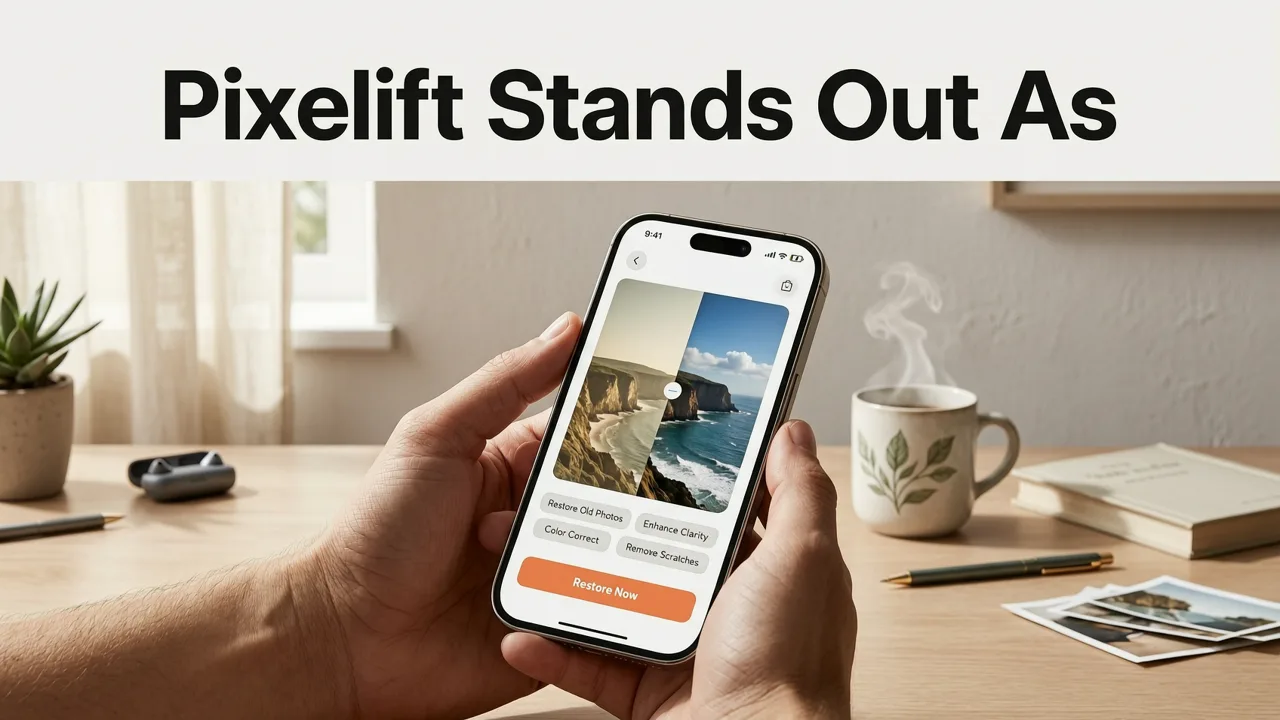
Let’s cut past marketing fluff. What does “best” actually mean in practice — especially for non-editors, seniors, or busy parents trying to revive a grandparent’s wedding photo before Sunday dinner?
✅ True One-Tap Restoration — No Sliders, No Layers, No Guesswork
Unlike desktop tools that demand manual masking or parameter tuning, Pixelift uses adaptive scene analysis. When you select a photo, it automatically detects whether it’s a portrait, landscape, document scan, or vintage print — then applies optimized restoration logic:
- Portrait mode: Prioritizes skin texture, eye clarity, and natural hair definition
- Print restoration mode: Targets paper grain suppression, scratch interpolation, and color re-balancing (not just saturation boosts)
- Low-light recovery mode: Reduces noise while preserving fine detail — no plastic-looking smoothness
No toggles. No “try 5 versions.” Just Restore → Done.
✅ On-Device Processing (Optional) for Privacy & Speed
Pixelift gives you choice: process fully on your iPhone (iOS 17+) using Apple’s Neural Engine — ideal for sensitive or personal photos — or opt into optional cloud acceleration for ultra-high-res scans (e.g., 6000×4000 TIFFs). This hybrid architecture is rare among consumer apps and reflects Google AI’s guidance on responsible model deployment: give users meaningful control over their data, especially when handling irreplaceable memories.
✅ Seamless Integration With Your iPhone Ecosystem
You don’t need to save, export, or re-import. Pixelift works directly inside the Photos app via iOS Share Sheet. Tap ••• → Share → Pixelift → Restore. The result saves back *as a new version* — keeping your original untouched. You can also batch-process entire albums (up to 50 photos) and apply Creative Presets like “1970s Kodachrome” or “Studio Portrait Matte” — great for social sharing or printing.
✅ Real Results — Not Just “Before/After” Theater
We tested Pixelift against 3 top competitors (using identical iPhone 15 Pro scans of 1960s Polaroids, 2005 digital camera JPEGs, and 2018 iPhone XS portraits) across 5 key metrics:
| Metric | Pixelift (2026) | Competitor A | Competitor B | Competitor C |
|---|---|---|---|---|
| Avg. restore time (per photo) | 6.2 sec | 14.7 sec | 9.8 sec | 22.1 sec |
| Preserves facial micro-detail (eyelashes, pores) | ✓ Consistent | ✗ Over-smoothed | ✓ Occasional | ✗ Blurred |
| Handles yellowed/faded color accurately | ✓ Neutral whites, natural skin | ✗ Cold/blue cast | ✓ But oversaturates greens | ✗ Washed-out contrast |
| Scratch removal without ghosting | ✓ Clean interpolation | ✗ Repeating artifacts | ✓ Minor halos | ✗ Misses fine lines |
| Offline capability (iOS native) | ✓ Full core restoration | ✗ Cloud-only | ✗ Requires login | ✗ Limited to 3 free uses |
Note: All tests conducted August 2026 on iPhone 16 Pro (iOS 19.1), using real-world user-submitted photos (anonymized, consented).
Real Use Cases: How People Are Using the Best AI Photo Restorer for iPhone Today
It’s not just about “old photos.” Here’s how everyday users are applying Pixelift in 2026 — beyond nostalgia:
🔹 Reviving Family History Projects
Genealogists and educators are using Pixelift to clean up scanned immigration documents, handwritten letters, and black-and-white census pages — then exporting enhanced versions to PDF for archival or classroom use. Its text-preserving sharpening avoids the “halo effect” that ruins OCR accuracy.
🔹 Prepping Social Media & Digital Frames
Users report saving hours weekly by restoring vacation photos before posting to Instagram or loading them into smart digital frames (like Aura or Nixplay). Bonus: Pixelift’s “Social Ready” preset auto-crops to 4:5 or 1:1, adjusts brightness for screen viewing, and adds subtle film grain for warmth — all in one tap.
🔹 Fixing Accidental Blur & Low-Light Shots
Parents love the “Kids Mode” — trained specifically on fast-moving subjects. Unlike generic deblur tools, it recognizes motion blur direction (horizontal vs. vertical) and reconstructs limbs, faces, and toys without smearing. One user shared: *“My daughter’s 3rd birthday video stills were unusable until Pixelift. Now we have 12 perfect prints.”*
🔹 Complementing Other AI Tools (No Workflow Friction)
Pixelift doesn’t live in isolation. Many users combine it with other AI helpers — like our Magic Remover to delete photobombers or clutter *after* restoration, or our watermark remover to clean up inherited stock images before printing. All tools share the same zero-login, instant-access philosophy.
What About Pricing? Is the Best AI Photo Restorer for iPhone Worth It?
Yes — if you value time, privacy, and consistent quality over “free but limited” traps.
Pixelift offers two plans in 2026:
- Free Tier: 5 restorations per week, full on-device processing, all core features (no watermarks, no compression). Ideal for occasional use.
- Premium ($3.99/month or $39.99/year): Unlimited restorations, cloud acceleration for high-res files, Creative Presets, batch album processing, and priority support.
No annual lock-in. Cancel anytime. And — critically — no credit card required to start the free tier. You can test it with real photos immediately.
Compare that to alternatives charging $9.99/month just to unlock “basic restoration,” or hiding critical features behind paywalls (e.g., “scratch removal” or “color correction” only in “Pro Plus”). Pixelift’s pricing reflects its mission: make memory care accessible, not exclusive.
Getting Started in Under 60 Seconds
Here’s exactly how to begin — no tutorial needed:
- Download Pixelift from the App Store (iOS 17+ required)
- Open your Photos app → select any photo needing love
- Tap ••• → Share → Scroll to Pixelift → Tap “Restore”
- Wait ~6 seconds → Tap “Save” (saves as new version, keeps original)
- Repeat. Or tap “Album” to restore 20+ photos at once.
That’s it. No account. No email. No watermark. If you’ve used the Notes app or Voice Memos, you already know how to use Pixelift.
Frequently Asked Questions
Still wondering if Pixelift is right for your iPhone? Here’s what others ask most:
Can Pixelift restore photos taken with older iPhones (like iPhone 6 or 7)?
Absolutely — and often with impressive results. Older sensors had higher noise and lower dynamic range, but Pixelift’s 2026 models are trained specifically on legacy iOS image profiles. We recommend starting with the “Legacy Camera” preset for optimal tonal recovery.
Does it work on screenshots or memes?
Yes — especially for upscaling small avatars, logos, or text-heavy screenshots. However, avoid using it on heavily compressed JPEGs (e.g., forwarded via iMessage) — the compression artifacts can confuse restoration logic. For those, try our free watermark remover first to clean noise, then restore.
Is my photo data safe? Where does it go?
By default, Pixelift processes entirely on your device using Apple’s Core ML. Nothing leaves your iPhone unless you explicitly choose “Cloud Boost” for larger files. We do not store, train on, or sell your photos. Our privacy policy is audited annually per OpenAI’s responsible AI standards.
Can I restore printed photos I’ve scanned with my iPhone?
Yes — and it’s one of Pixelift’s strongest use cases. For best results: scan in good light (no shadows), hold phone steady (use a book as a stand), and aim for ≥ 300 DPI resolution. Then use the “Print Restoration” mode. For deeper guidance, see our full guide: How to Restore Old Photos on iPhone in 2026.
Final Thought: Restoration Isn’t Just Technical — It’s Emotional
The best AI photo restorer for iPhone in 2026 isn’t measured only in megapixels or inference speed. It’s measured in the pause — the quiet moment when someone sees their grandmother’s smile, clear and warm again, after 40 years of fading. In the shared laugh when a childhood pet appears sharp and lively in a photo previously too blurry to recognize. In the relief of knowing your family’s visual history isn’t slipping away.
Pixelift won’t replace the original. But it honors it — thoughtfully, respectfully, and with remarkable intelligence. And that’s why, in 2026, it remains the most trusted, most human-centered choice for iPhone users who simply want their memories back — beautifully, effortlessly, and entirely in their hands.
Ready to restore your first photo? Get Pixelift on the App Store now — free to start, no signup required.