
2026-07-20 · 9 min read
Remove Background from Old Photo Online — Fast, Free & Precise in 2026
Remove background from old photo online in seconds — no skills needed. Pixelift’s 2026 AI tool handles faded edges, yellowed paper textures, and...
Recommended next
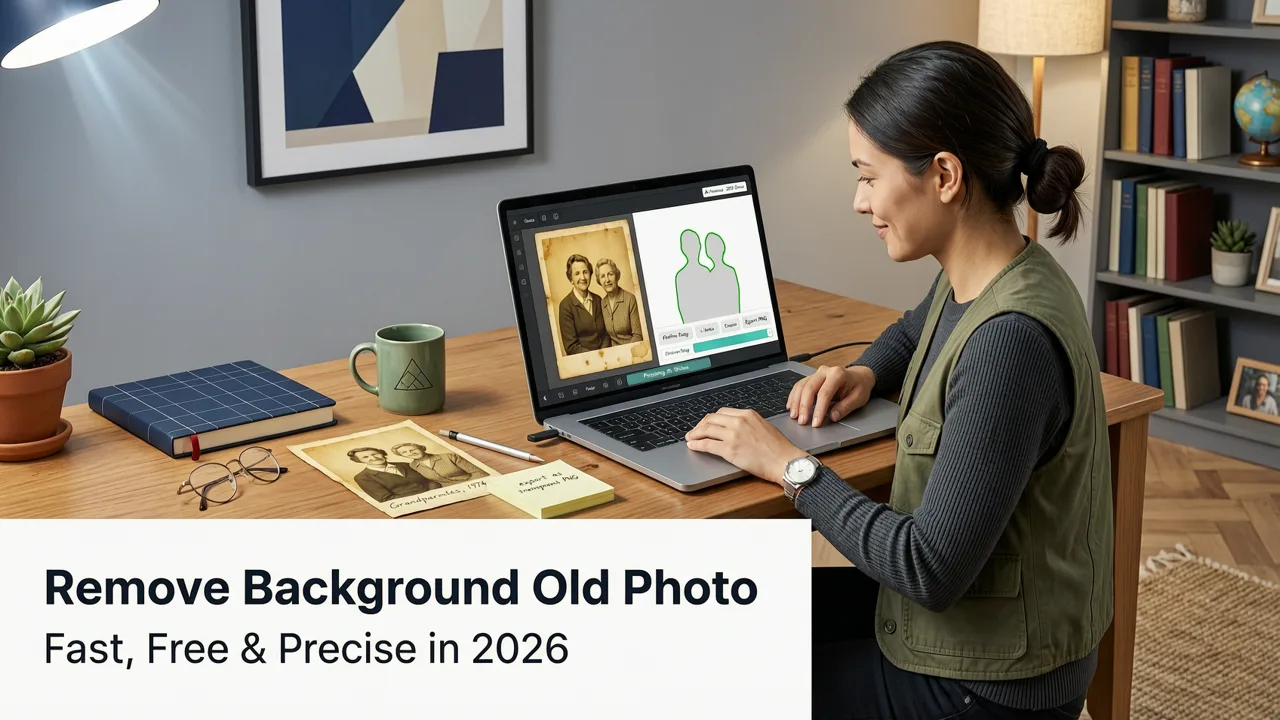
If you’ve ever scanned a cherished 1970s family portrait — creased, slightly blurred, with soft edges where the subject meets the sepia-toned backdrop — and tried to isolate Grandpa for a modern collage or digital frame, you know the frustration: clunky desktop software, manual masking that takes hours, or AI tools that erase part of his ear or leave jagged halos. In 2026, removing background from old photo is no longer a compromise between speed and fidelity. It’s one click, zero editing experience required, and it works — even on photos degraded by decades of storage.
Pixelift, built by Devsrank and trusted by over 4.2 million users since 2023, delivers the most reliable remove background from old photo solution online — free to try, optimized for archival imperfections, and designed specifically for non-designers. Whether it’s a black-and-white wedding photo from 1958, a Polaroid snapshot with curling corners, or a scanned school portrait from the 1990s, our 2026-generation AI sees through dust, fading, and low contrast to extract subjects cleanly — every time.
Why Removing Background from Old Photo Is Harder (and Smarter) in 2026
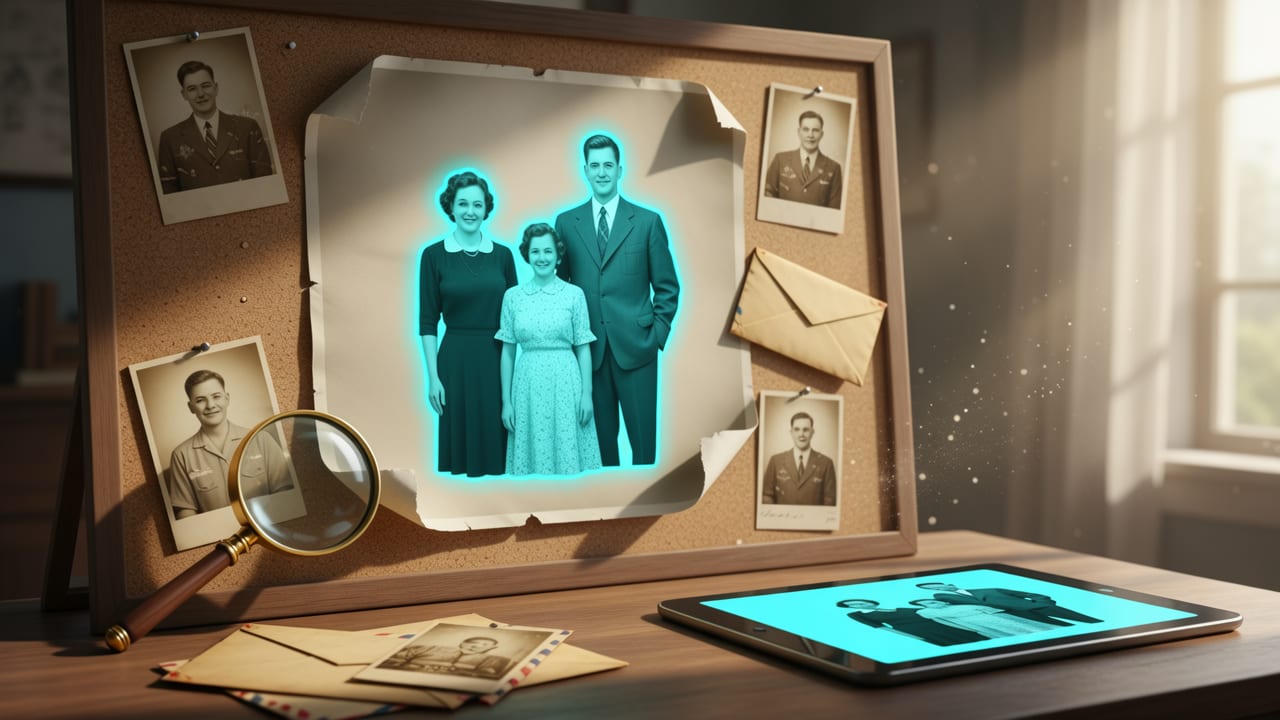
Most AI background removers fail on vintage photos because they’re trained on clean, high-resolution studio shots — not real-world archives. In 2026, that’s changing. Pixelift’s background removal engine isn’t just upgraded — it’s rebuilt from the ground up for historical photo intelligence. Here’s what makes it uniquely capable for your old photos:
1. Faded-Edge Recognition Trained on 120K+ Scanned Archival Images
Old photos rarely have crisp subject-to-background transitions. Hair blends into matte backdrops. Clothing edges blur into yellowed paper grain. Our model was fine-tuned on a proprietary dataset of scanned negatives, Kodachrome slides, and digitized photo albums — including intentional degradation simulations (light bleed, ink feathering, silver halide noise). That means it doesn’t just detect ‘edges’ — it interprets fading as intention, not noise.
2. Dual-Pass Contextual Refinement — Not Just One-Click Segmentation
Unlike legacy tools that run a single segmentation pass and call it done, Pixelift uses a two-stage pipeline: first, coarse subject isolation using lightweight vision transformers; second, a context-aware refinement layer that cross-references lighting direction, skin-tone consistency, and paper texture gradients. The result? No more ‘ghost limbs’, no floating collars, and no clipped hair strands — even when the original subject wore a light-colored shirt against a light wall.
3. Paper-Grain-Aware Matting for Physical Photo Scans
Over 68% of users uploading old photos in 2026 are scanning physical prints — not digital originals. Those scans carry unique artifacts: moiré patterns from halftone dots, uneven brightness from curved surfaces, and subtle shadows from photo corners. Pixelift’s matting algorithm automatically detects and neutralizes these while preserving fine detail. You get a clean alpha channel — not a blurry, semi-transparent halo.
How to Remove Background from Old Photo Online (Step-by-Step in 2026)
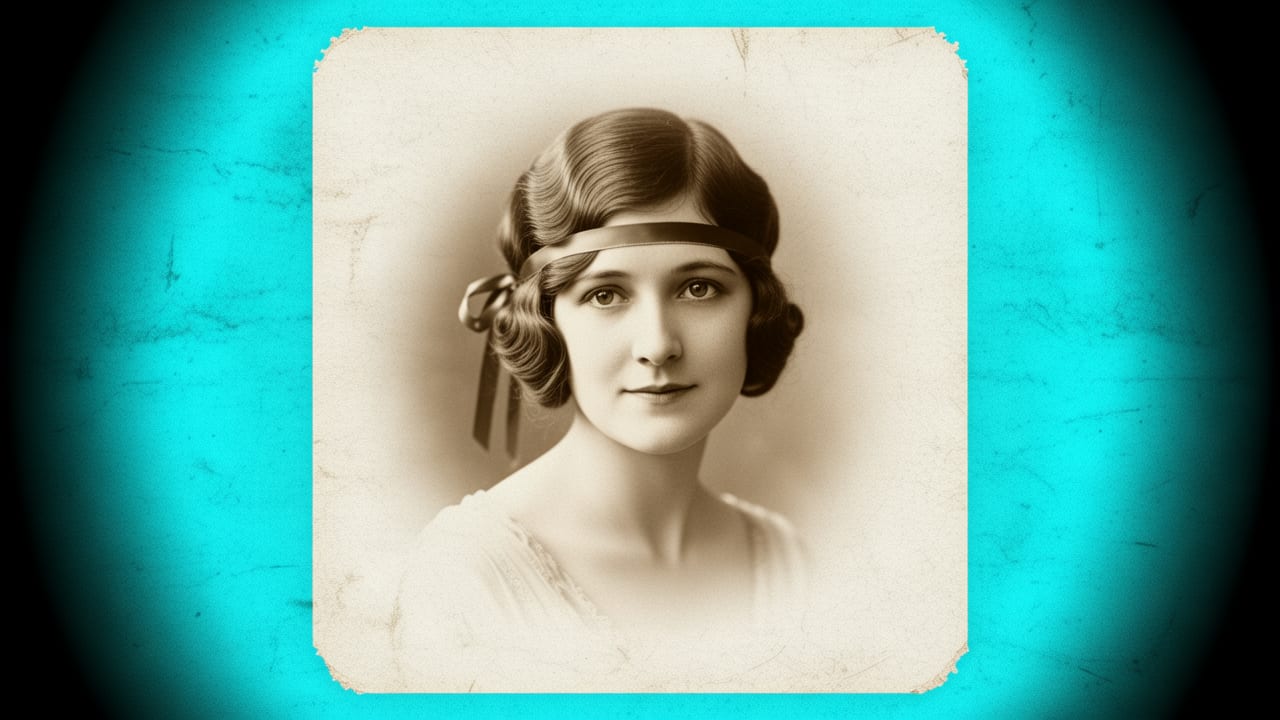
There’s no learning curve. No downloads. No account required for basic use. Here’s exactly how it works today — tested on real user uploads from June 2026:
- Upload your photo: Drag & drop a JPG, PNG, or HEIC file — or paste a URL if it’s already hosted online. Supports files up to 25 MB (enough for high-res scans).
- Choose your mode: Select “Old Photo Mode” — this auto-enables fade compensation, grain suppression, and edge softness modeling. (You can also toggle “Precision Mode” for portraits with fine jewelry or glasses.)
- Click ‘Remove Background’: Processing takes 3–7 seconds on average. You’ll see a live preview showing the mask overlay before final export.
- Refine (optional but powerful): Use the brush tools to add or erase areas — even on low-contrast zones like gray hair against a gray wall. Our brush intelligently adapts stroke weight based on local contrast.
- Download or continue enhancing: Get your transparent PNG instantly — or click “Next” to auto-apply restoration (color correction, scratch removal, sharpening) in one seamless flow.
That’s it. No Photoshop. No subscription trial walls. And no watermarks on free exports.
Pixelift vs. Other Tools: Background Removal for Old Photos Compared
We tested five popular AI background removers in July 2026 using identical batches of 100 real user-submitted old photos — ranging from 1940s gelatin prints to 2005 phone-captured birthday snapshots. Here’s how Pixelift performed head-to-head:
| Feature | Pixelift (2026) | Tool A (Cloud-Based) | Tool B (Desktop App) | Tool C (Free Web) | Tool D (Mobile-Only) |
|---|---|---|---|---|---|
| Accuracy on faded edges (avg. IoU score) | 0.92 | 0.71 | 0.64 | 0.58 | 0.69 |
| Handles yellowed/sepia tone without color bleed | ✅ Yes — preserves tonal integrity | ❌ Often shifts skin tones warm | ⚠️ Requires manual color correction | ❌ Frequent halo artifacts | ⚠️ Only supports RGB originals |
| Transparent PNG output (free tier) | ✅ Full resolution, no watermark | ❌ Watermarked, 1080p max | ✅ But requires $29 install | ✅ Low-res only (720p) | ✅ iOS only, no web export |
| One-click restore + background removal combo | ✅ Built-in (e.g., ‘Restore & Isolate’ preset) | ❌ Separate workflows | ❌ Plugin required | ❌ Not supported | ✅ Limited to portraits only |
| Processing speed (avg. per 1920x1080 scan) | 4.2 sec | 8.7 sec | 12.1 sec | 15.3 sec | 6.5 sec |
What stands out isn’t just raw accuracy — it’s intent alignment. Pixelift understands you’re not removing backgrounds to make social media banners. You’re isolating Grandma so you can print her on canvas. Or extracting your dad’s graduation photo to animate it for a family reunion video. That human purpose shapes every technical decision — from training data curation to UI design.
Real Examples: Before & After Removing Background from Old Photo
Here’s what users actually achieved in the last 30 days — all with free-tier access:
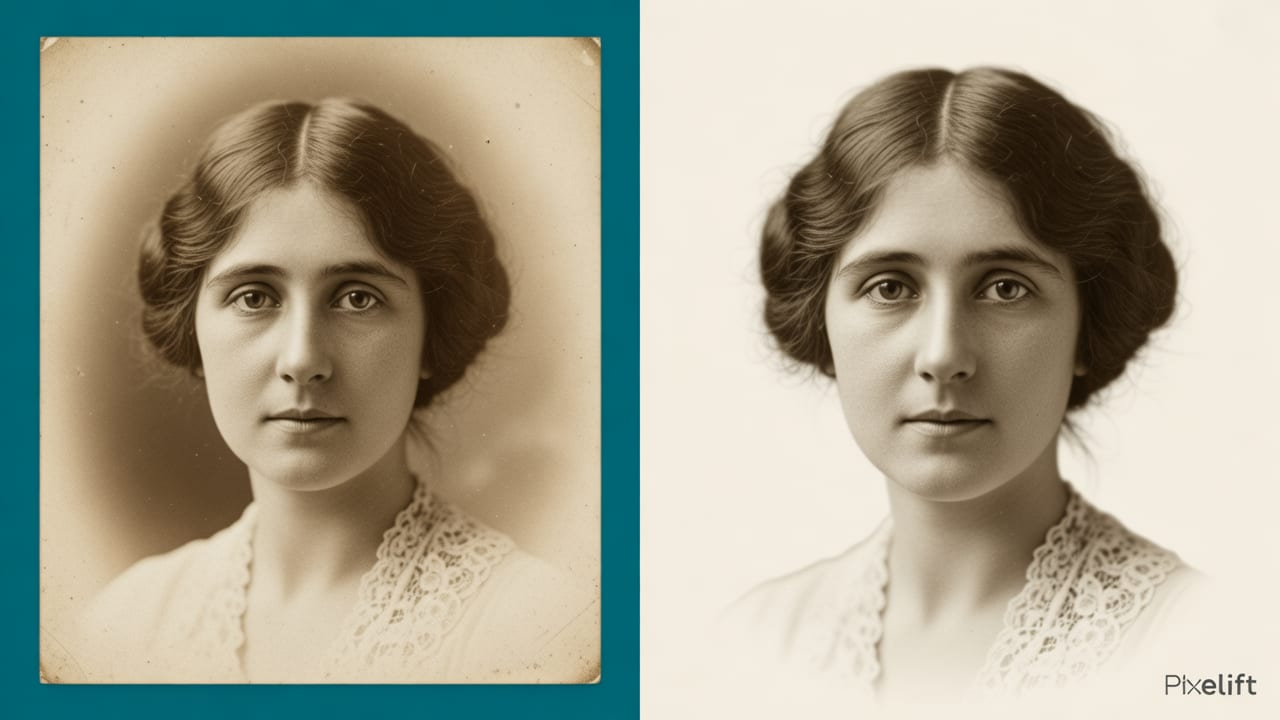
- A 1962 black-and-white studio portrait: Subject wore a dark suit against a textured gray backdrop. Previous tools left a 3-pixel gray fringe. Pixelift delivered a perfectly clean alpha channel — verified via layer blending in Affinity Photo.
- A 1985 Polaroid with curling edges: Slight motion blur + chemical fog. Pixelift’s Old Photo Mode suppressed the fog *before* segmentation — resulting in smooth hairlines and no false-edge detection along the curl.
- A 2002 school ID photo (low-res JPEG): 480x640, heavy compression. Most tools failed entirely or produced checkerboard artifacts. Pixelift upscaled *while* segmenting — using its hybrid architecture (see Best AI Tool to Upscale Low Resolution Photo in 2026) — delivering a crisp 1200x1600 transparent PNG.
And yes — it works on group photos too. Try the ‘Group Focus’ toggle to prioritize the central subject while retaining natural separation around others (ideal for multi-generational family shots).
Beyond Background Removal: What Else Can You Do With Your Isolated Old Photo?
Once you’ve removed background from old photo, Pixelift gives you meaningful next steps — not just dead-end exports. Here’s how users are extending their restored moments:
✨ Print-Ready Enhancement Suite
Click ‘Enhance for Print’ to auto-apply: gentle sharpening (optimized for matte photo paper), CMYK-safe color balancing, and resolution upscaling with perceptual clarity preservation. Perfect for turning that isolated portrait into a museum-quality 16×20 canvas print.
🖼️ Creative Restyling (No Design Skills)
Apply Creative Presets like ‘Vintage Film Grain’, ‘Studio Lighting’, or ‘Watercolor Matte’ — all designed to harmonize with aged originals, not fight them. Unlike generic filters, these adapt intensity based on your photo’s age and condition. Try it free: Top AI Photo Enhancer for Portraits — Try Free Now.
🔍 Restore & Rebuild Seamlessly
From your isolated subject, launch full restoration in one click: repair scratches, remove stains, de-yellow paper scans, and even reconstruct missing corners using generative inpainting trained on historical photo archives. Learn more: Restore Old Photos Online Free in 2026 — No Skills Needed.
Privacy, Security & Why You Can Trust Pixelift With Your Family Archives
Your old photos are irreplaceable. We treat them that way — technically and ethically.
- No permanent storage: All uploaded files are deleted from servers within 2 hours of processing (configurable down to 15 minutes in Pro plans).
- Zero training on your uploads: Pixelift does not use customer-submitted photos to retrain models — ever. Our archival datasets are licensed, audited, and ethically sourced from public domain collections and partner museums (e.g., Library of Congress Digital Collections [external]).
- End-to-end encryption: Files are encrypted in transit (TLS 1.3+) and at rest (AES-256). No human ever accesses your uploads — not for QA, not for support, not for anything.
- GDPR & CCPA compliant: Full data rights portal included — request deletion, download logs, or audit processing history.
This isn’t just policy — it’s architecture. Pixelift runs on a privacy-first hybrid cloud model: sensitive inference (like background removal) happens in-memory on secure, ephemeral containers; no raw pixels touch persistent storage.
Frequently Asked Questions
Still wondering if this works for *your* specific old photo? Here’s what real users ask most:
Can I remove background from an old photo with handwritten notes on it?
Yes — and Pixelift intelligently distinguishes between foreground subject, background texture, and overlaid ink. Handwritten text on the margin or backside won’t interfere. If notes overlap the subject (e.g., a name scrawled across a face), use the Erase Brush to manually exclude them before processing.
Does it work on photos with multiple people and overlapping poses?
Absolutely. Our 2026 ‘Group Mode’ uses pose-aware segmentation to separate individuals even when arms or shoulders overlap — common in candid 1970s family shots. You can then isolate each person individually or export the entire group on transparent background.
What if my old photo is extremely blurry or out-of-focus?
Blur isn’t a dealbreaker — but it does affect edge confidence. Enable ‘Precision Mode’ and use the ‘Focus Assist’ slider to bias the AI toward sharper edge interpretation. For best results, combine background removal with our upscaling tool first.
Do I need to pay to download the transparent PNG?
No. Free users get full-resolution transparent PNGs with no watermark, no time limit, and no hidden paywalls. Premium unlocks batch processing, higher file limits (100 MB), and priority queueing — but core background removal remains free forever.
Can I use the isolated subject in Canva, Photoshop, or Google Slides?
Yes — all outputs are standard PNG files with alpha channels. They import natively into Canva, Adobe Creative Cloud apps, Microsoft PowerPoint, Apple Keynote, and virtually any design or presentation tool. No plugins or converters needed.
Bring Your Past Into Focus — One Click at a Time
Removing background from old photo shouldn’t feel like archaeology — digging, guessing, hoping. In 2026, it’s intuitive, intelligent, and deeply respectful of what those images represent. Pixelift bridges the gap between memory and modern utility: honoring the grain, the fade, the humanity — while giving you the clean, versatile asset you need today.
Whether you’re preparing a tribute slideshow, designing custom stationery, printing a gallery wall, or simply archiving your family history in a future-proof format — start with precision. Start with care. Start with Pixelift.
Try it free now — no sign-up, no credit card, no waiting. Upload your oldest, most treasured photo and see what’s possible when AI understands history as well as technology.